In the past week alone, organisations like ADT and Medtronic have reported breaches affecting millions of records. While early reports often point to phishing or “unauthorised access,” investigations frequently uncover a less obvious cause: forgotten systems, unsupported technology, and retired hardware.
When attackers move through an environment, they don’t just target what’s visible. They look for what’s no longer being watched – or no longer being maintained.
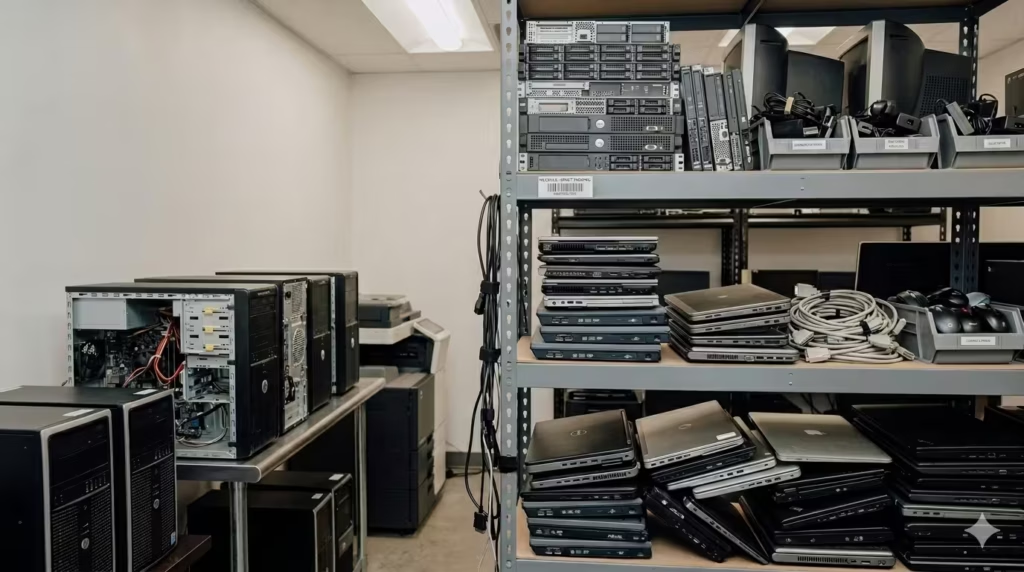
– Old servers left in storage.
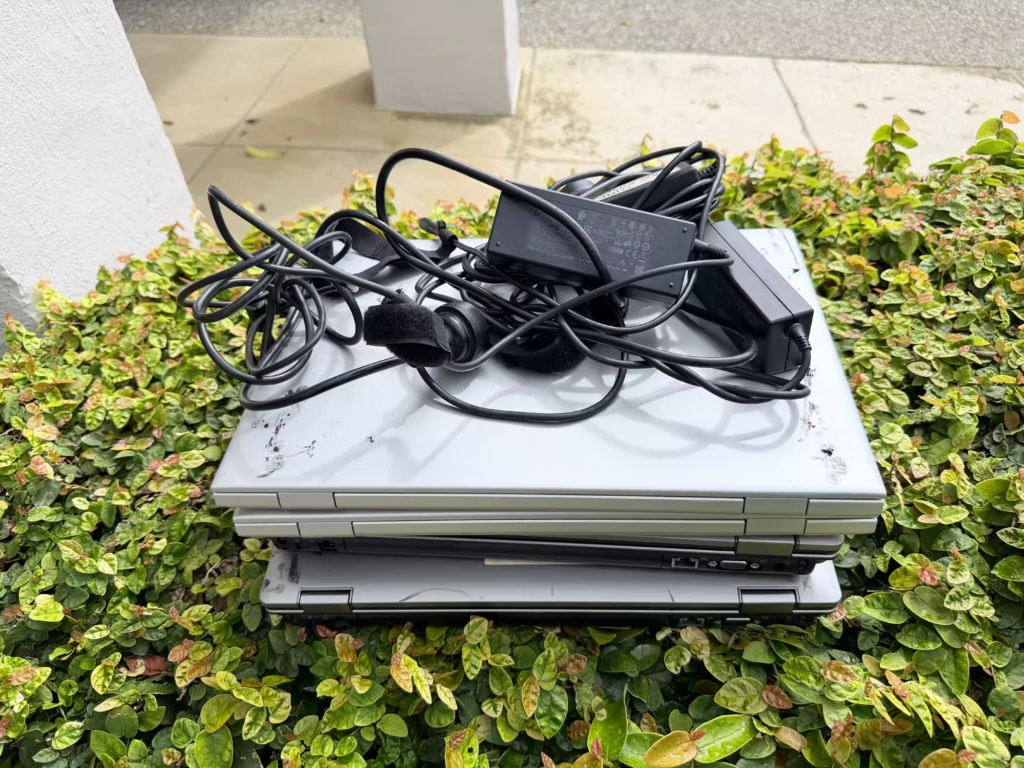
-Decommissioned laptops.
-Backup drives that were never properly sanitised.
-And legacy systems still running without support.
These assets don’t show up in dashboards. They aren’t patched, monitored, or properly secured. But they often still contain sensitive data – and in some cases, provide access pathways into wider systems.
In cybersecurity, these aren’t just leftovers. They’re ghosts – and sometimes, they’re still alive.
The Hidden Risk Still Running in Plain Sight
Not every risk is sitting in a storage room. Some are still powered on, connected, and quietly increasing your exposure.
Legacy servers and ageing systems that can no longer receive security updates or vendor support present a serious security gap. Over time, they fall behind modern protections, leaving known vulnerabilities unpatched and exploitable.
- No updates.
- No vendor support
- No fixes for newly discovered threats.
Attackers actively seek out these systems because they are predictable – and often easier to compromise.
Many organisations keep them running due to operational reliance or the perceived cost of replacement. But the real cost lies in leaving known vulnerabilities exposed inside your environment.
If a system can’t be secured, it needs a clear plan to be isolated, replaced, and retired.
And when it is retired, it must be handled with the same level of control and verification as any other data-bearing asset.
The New Zealand Reality: Recycling Isn’t Security
Across New Zealand, e-waste is still treated primarily as a logistics or sustainability issue. But under the Privacy Act 2020, it’s also a data security and compliance risk.
A common assumption is that formatting a device is enough. It isn’t.
Formatting removes the index to your data – not the data itself.
With readily available forensic tools, that information can often be recovered quickly and at low cost. That means a device leaving your organisation could still contain customer records, financial data, or internal system information.
All it takes is one improperly handled asset to create a serious exposure.
What Secure ITAD Actually Looks Like
Managing retired hardware isn’t about disposal – it’s about control, verification, and accountability.
A secure IT Asset Disposition (ITAD) process ensures every device is properly accounted for, securely sanitised, and fully documented.
At Extech, this is delivered through a structured, standards-aligned process:
Standards-Aligned Sanitisation
We follow NIST 800-88 guidelines to ensure data is securely handled in line with globally recognised standards.
Physical Destruction When Required
For assets that cannot be reused—or where maximum assurance is required – drives are physically destroyed using industrial-grade shredding, ensuring data is completely irrecoverable.
End-to-End Traceability
Every asset is tracked from collection through to final disposition. You receive full reporting and a Certificate of Destruction to support your legal and audit requirements.
Before It Becomes a Headline
A retired server sitting in storage.
A legacy system still running without updates.
A batch of laptops sent for recycling.
A forgotten backup drive.
These aren’t harmless leftovers – they’re potential breach entry points.
As recent incidents continue to show, organisations don’t just need to secure active systems. They need to account for everything they’ve left behind – and everything they’ve kept running past its safe lifespan.
Extech Ewaste Solutions provides secure, certified ITAD services across New Zealand, helping organisations eliminate hidden data risks while supporting the circular economy.
Know exactly where your data ends – and prove it.
Book Your Secure Collection Today.